
By: Ashleigh Shoecraft
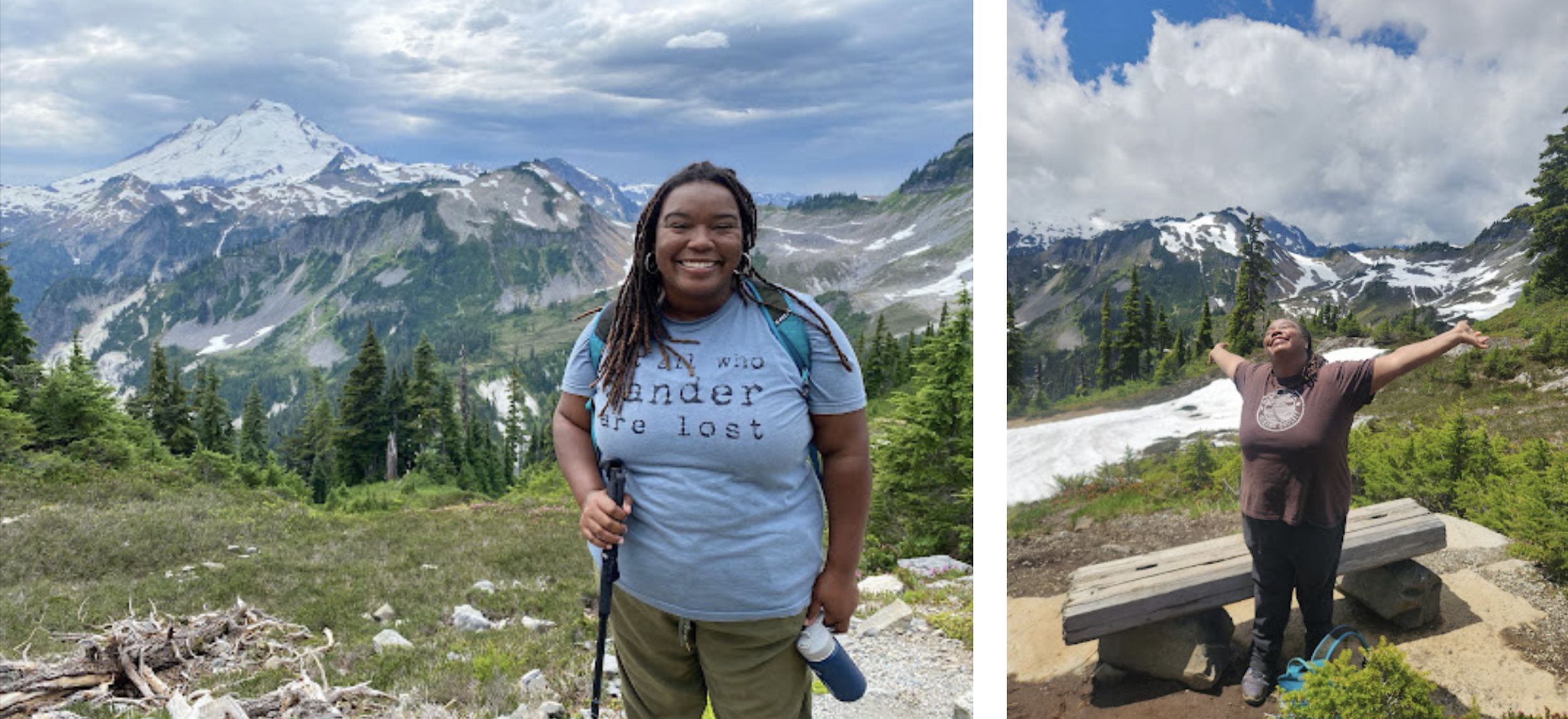
Artist’s Point, August 9, 2022 and July 5, 2026
This year, I have been practicing a year of return.
Rather than continually seeking new experiences outdoors, I have been intentional about returning to places that have held me well, places where I have experienced wonder, rest, and a deep sense of connection to the natural world.
Some of these places are close to home:
Chinese Reconciliation Park, where I can sit along the waterfront and take in the beauty of Puget Sound.
Twanoh State Park, where the forest meets the shoreline of Hood Canal and opportunities to forage abound.
Artist Point, where I am continually overwhelmed by the sheer generosity of Washington’s natural beauty.
I return to these places not because I have exhausted all the others I could explore, but because there is something meaningful about deepening my relationship with places where I have already experienced joy, wonder, and belonging.
I have come to think of this practice as a way of rehearsing safety. With each return, I am strengthening my body's memory of what it feels like to experience peace, wonder, and belonging in the natural world. I am cultivating a familiarity that allows me to approach these places with a sense of ease, rather than having to establish that relationship anew each time. It reminds me of the importance of eco-memory, the ways our experiences with the natural world shape what we come to believe about our place within it.
This has also been a central consideration in my leadership at Braided Seeds, where we regularly engage with people who carry very real fears about being outdoors, whether that is fear of water, wild spaces, getting lost, or being the only person of color in a remote place. These fears are familiar to us because we have navigated our own journeys of restoring our relationships with the outdoors, particularly here in the Pacific Northwest, where vast wilderness can evoke both wonder and anxiety. Our personal experiences allow us to recognize ourselves in many of the people we adventure alongside and approach their fears with grace rather than judgment.
That understanding shapes how we do our work. We are intentional about not reproducing the systems of control, policing, and exclusion that have contributed to people's estrangement from the natural world. Instead, we try to lead with trust, honoring people's autonomy and allowing them to determine what safety and participation look like for themselves. We recognize that rebuilding a relationship with the outdoors cannot be forced, and that sometimes the most meaningful thing we can offer is an experience where someone feels respected, supported, and free to engage on their own terms.
The reality is that there are very good reasons why many of us do not feel safe.
For Black communities especially, our relationship with the natural world exists alongside histories of enslavement, displacement, exclusion, and violence. We know that trauma can reverberate across generations through the stories, warnings, and survival strategies we inherit and, emerging research suggests, potentially even through our biology. Some of the fears we carry were cultivated in circumstances where vigilance was necessary for survival, and I think there is something important about honoring that inheritance rather than treating it as an obstacle we simply need to overcome.
We also cannot pretend that these dangers belong exclusively to the past. Recently, families who had spent years returning to a campground in the Mount Baker-Snoqualmie National Forest had their holiday weekend interrupted when federal immigration agents entered the campground and arrested five members of their group. A place that had become a familiar refuge was suddenly a place where their safety was violated.
I have been sitting with that reality because, while we encourage communities to reclaim their relationships with public lands and experience the restorative benefits of nature, we must also acknowledge that many people do not feel safe because they have not been safe. Our work cannot simply be about encouraging people to push beyond their fears without also recognizing the conditions that produced them.
Yet, alongside these reflections, I have found myself wondering about the other side of what we inherit. If fear can be passed down through generations, what about safety? If our bodies can learn to anticipate danger, can they also learn to recognize belonging?
Perhaps part of repairing our estrangement from the natural world involves intentionally nurturing relationships with places where we have already experienced safety, allowing those familiar places to become gateways to new experiences and a broader sense of belonging.
My hope is that we can cultivate an ecological inheritance that includes more than warnings about where not to go and what to fear. I want us to pass down memories of the water where we learned to swim, the parks where our families gathered, and the trails where we experienced the freedom to simply exist. I want future generations to inherit relationships with land rooted not only in survival, but also in joy, intimacy, and the knowledge that they belong.
As I continue my own practice of return, I invite you to consider where you have experienced that kind of connection.
What places in the natural world have held you well, offered you rest, or reminded you of your belonging?
What might it mean to intentionally return to those places, allowing those experiences to deepen and become part of the legacy you carry forward?